
What surfaces should I avoid using Bathroom & Shower Cleaner on?Updated 7 days ago
TL;DR: Four things to keep Bathroom & Shower Cleaner away from. Food prep surfaces. Unfinished or untreated timber. Aftermarket glass coatings and tint films. And natural stone until you have spot-tested, since marble, travertine and limestone can react to cleaners. Everywhere else in a bathroom it is fine: sealed tiles, grout, glass and acrylic screens, baths, basins, taps, chrome, stainless and fibreglass trays. For kitchen benchtops, reach for Universal Cleaner or Kitchen Grease & Oil Cleaner.

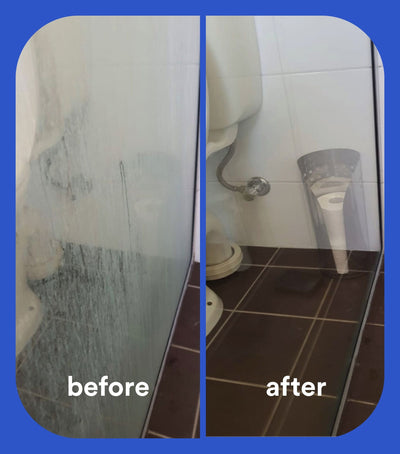
What surfaces should I avoid using Bathroom & Shower Cleaner on?
⚠ Use something else for these four
Food prep surfaces. Chopping boards, benchtops where food is handled, anything that touches what you eat. Universal Cleaner is the one for those.
Unfinished or untreated timber. Bare timber absorbs the formula rather than letting it sit on the surface, and it can mark or raise the grain.
Aftermarket glass coatings and tint films. If your screen has a factory-applied or retrofitted coating, the coating manufacturer sets the cleaning rules. Many exclude foaming cleaners entirely.
Natural stone, until you spot-test. Marble, travertine and limestone are porous and can dull or etch. Test a hidden patch first, and if the stone supplier says pH-neutral only, follow them.
✓ One catch-all worth remembering
If a surface manufacturer has told you not to use water-based foam cleaners on it, they win. That applies to specialty finishes, some powder-coated tapware and anything with a warranty condition attached to how you clean it. Their instructions beat ours every time, because they know what is under the finish.
Which bathroom surfaces does it suit?
✓ Suits most sealed bathroom surfaces
Shower screens in glass or acrylic, glazed tiles, grout, bathtubs, basins, taps, shower trays, fibreglass, stainless steel, chrome and painted surfaces. Spray, let the foam sit for a few minutes, then wipe or rinse with water.
The reason the list is this broad is the pH. The formula is mildly alkaline rather than the strong acid descalers or caustic cleaners a lot of bathroom products are built on, so it is easier on grout lines, seals and metal finishes over the long run.
What should I use for kitchen surfaces instead?
The everyday kitchen spray and wipe. Benchtops, splashbacks, stainless sinks, stovetops. Give food prep surfaces a damp rinse afterwards.
✓ Kitchen Grease & Oil Cleaner
Built for baked-on grease. Rangehoods, ovens, stovetops and the splashback behind the cooktop. Rinse after use.
How do I spot test a surface?
✓ Three-step spot test
Pick somewhere nobody looks. Behind the cistern, under a shelf, inside a vanity cabinet.
Spray, wipe, wait. A small amount, a clean cloth, then a few minutes for anything to show up.
Look for four things. Colour change, dullness, etching, softening. Any of them and you stop there.
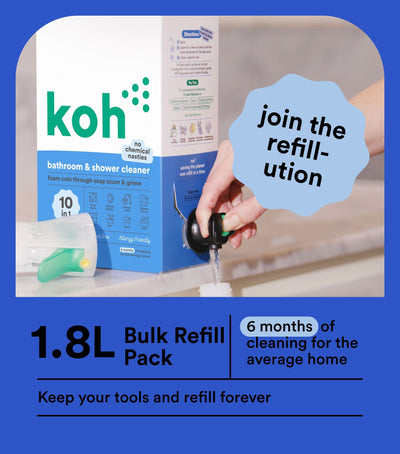
GECA certified, Sensitive Choice approved, Dermatest tested, Eczema Association recognised. Made in Australia.
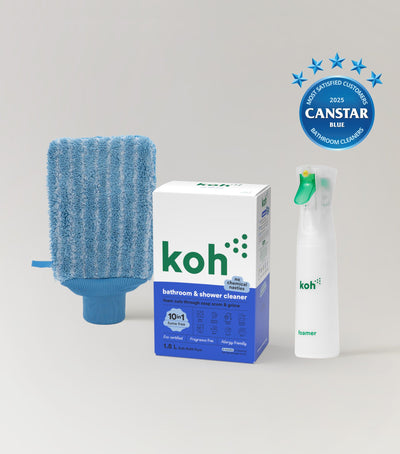
Bathroom & Shower Cleaner, Ultra Pro Bathroom Mitt and Foaming Spray Bottle. New to Koh, this is the one to start on.

Koh Perks · earn points on every order
Earn points on every purchase, refer a friend, and redeem for discounts on your next order.
Browse all Bathroom & Shower Cleaner articles
Last reviewed: September 2026 · Koh Australia