
How do I use Diamond Sponges?Updated 11 days ago
TL;DR: Diamond Sponges are a powerful abrasive tool, best for ovens and baked-on grease with Universal Cleaner. Dampen the sponge, rub gently in circles, and wipe residue with a Universal Cloth. The coating is abrasive, so always spot test first and avoid glass, polished, chrome, stainless steel, and delicate finishes.
How do I use Diamond Sponges?
Dampen the sponge. Spray Universal Cleaner directly onto Diamond Sponge. For baked-on grease, spray the surface too and let it sit a few minutes.
Rub gently in circles. Apply to the target area with light pressure to start. The silica alumina coating does the work.
Wipe and repeat. Spray more Universal Cleaner onto the surface as you go. Wipe residue with Universal Cloth. Repeat as required.
What are Diamond Sponges best used for?
Best for ovens and grease
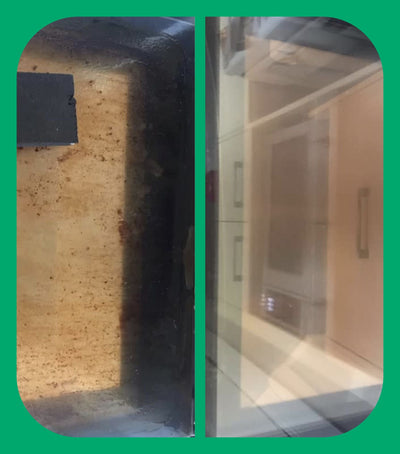
Oven racks, oven interiors, and cooktops with baked-on grease, used with Universal Cleaner. This is what it does best.
⚠ Glazed tile and porcelain: spot test
The abrasive coating can dull or scratch glazed ceramic, porcelain tile, and porcelain sinks. Not recommended on high-gloss finishes. If you try it, spot test a hidden area first and use the lightest pressure.
Which surfaces should I avoid with Diamond Sponges?
⚠ Glass, polished and delicate
Glass, chrome, stainless steel, acrylic, plastic, painted surfaces, polished timber, high-gloss finishes, and unsealed stone will scratch. The coating is harder than these surfaces.
⚠ Spot test and go gentle
Always spot test in a hidden corner before any new surface. Use light pressure and stop immediately if you notice any dulling, scratching, or change in finish. Abrasion damage cannot be undone.
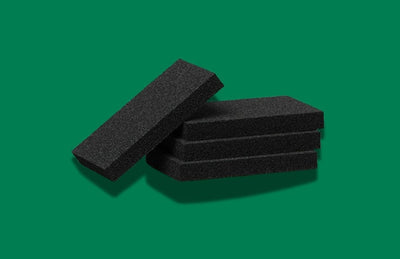
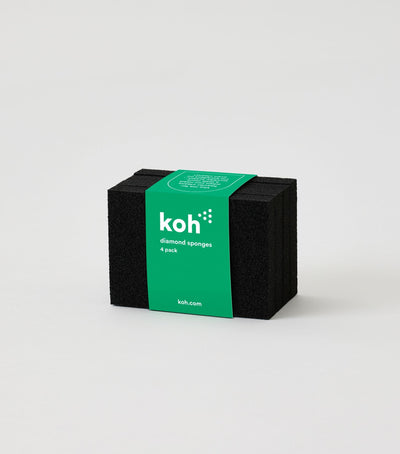
4-pack. Built for ovens and baked-on grease. High-density PU foam with a silica alumina coating.
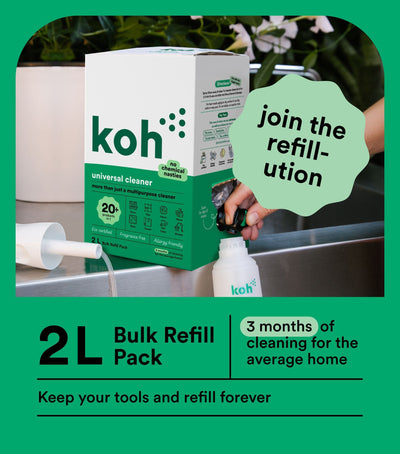
The pairing for Diamond Sponges. Spray it on, scrub, and lift baked-on grease.

Koh Perks · earn points on every order
Members earn points on every purchase, refer a friend, and redeem for discounts. Find all the ways to save in one place.
Browse all Diamond Sponges articles
Last reviewed: July 2026 · Koh Australia