
What are the ingredients in Stain Remover?Updated 6 days ago
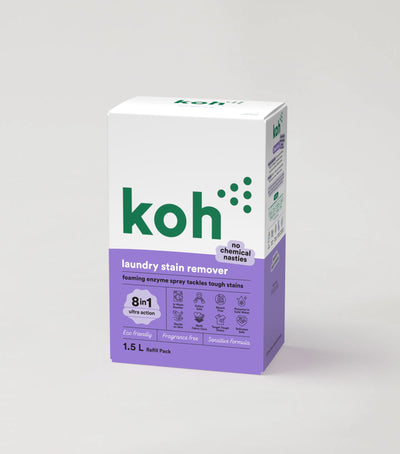
TL;DR: Stain Remover is an enzyme formula. It pairs six enzymes with surfactants, an anti-redeposition polymer, a thickener, stabilisers and preservatives. No added fragrance, no chlorine bleach, no dyes, no phosphates. Good Environmental Choice Australia (GECA) certified, Dermatest tested and Sensitive Choice approved. Made in Australia, and the full list is printed on the box.

What is in the formula?
✓ What is not in there
A short list of what Stain Remover leaves out, all of it relevant in a sensitive skin household.
✓ What is in there
Grouped by what each part does:
✓ Surfactants, which lift soil and grease out of the fabric
✓ Six enzymes: lipase, protease, amylase, cellulase, pectate lyase and mannanase
✓ An anti-redeposition polymer, acrylates copolymer
✓ A thickener, xanthan gum
✓ Stabilisers: propylene glycol, sodium formate, citric acid and calcium chloride
✓ Preservatives: phenoxyethanol and caprylyl glycol
✓ Aqua, which lets the formula spread evenly when you spray
✓ Full ingredient list, as printed on the box
Aqua, Sodium Laureth Sulfate, Sodium C14-16 Olefin Sulfonate, Caprylyl/Capryl Glucoside, Lauryl Glucoside, Alcohols C12-14 Ethoxylated, Propylene Glycol, Sodium Formate, Acrylates Copolymer, Phenoxyethanol, Caprylyl Glycol, Lipase, Protease, Amylase, Cellulase, Pectate Lyase, Mannanase, Citric Acid, Xanthan Gum, Calcium Chloride.
See what each ingredient does below.
Aqua (water)
Lets the formula spread evenly across the fabric when you spray.
Sodium laureth sulfate
A surfactant. Lifts soil and grease out of the fabric so it rinses away in the wash.
Sodium C14-16 olefin sulfonate
A surfactant. Helps tackle oily and greasy marks.
Caprylyl/Capryl glucoside
A surfactant. Helps the foam sit on the stain so it has time to work before you wash.
Lauryl glucoside
A surfactant. Helps the foam hold its structure on the fabric.
Alcohols C12-14 ethoxylated
A surfactant. Helps the formula spread evenly and rinse cleanly out of the fabric.
Propylene glycol
A stabiliser. Helps keep the formula consistent in the bottle between uses.
Sodium formate
A stabiliser. Helps the formula stay consistent across the pack so the last spray performs like the first.
Acrylates copolymer
An anti-redeposition polymer. Holds lifted soil in the wash water so it rinses away rather than resettling on the rest of the load.
Phenoxyethanol
A preservative. Keeps the formula fresh in the bottle over time.
Caprylyl glycol
A preservative. Helps keep the formula fresh once the bottle has been opened.
Lipase
An enzyme. Targets oily and fatty marks like cooking oil, salad dressing, butter and lipstick. The kind that look invisible until the fabric comes out of the dryer with a darker patch.
Protease
An enzyme. Targets protein-based stains like blood, sweat, egg and dairy.
Amylase
An enzyme. Targets starch-based food stains like pasta sauce, gravy and baby food.
Cellulase
An enzyme. Targets grass and vegetable soils.
Pectate lyase
An enzyme. Targets fruit residues like berry juice, tomato sauce and fruit purees.
Mannanase
An enzyme. Targets gum-thickened foods like ice cream, salad dressing and yoghurt.
Citric acid
A pH adjuster.
Xanthan gum
A thickener. Keeps the ingredients evenly suspended so every spray delivers the formula the same way.
Calcium chloride
A stabiliser. Helps the formula work consistently across different water types.
Where can I find the Safety Data Sheet?
✓ Safety Data Sheet
Get the Safety Data Sheet
Heads up: the Safety Data Sheet is written for workplace safety officers, first responders and waste handlers. It uses hazard classification language rather than everyday language.
If your question is about ingredients, sensitivity or everyday use, the ingredient list above and the product page will get you there faster.
Need the SDS itself? It is a standardised 16-section PDF covering hazards, first aid measures, handling and storage, and disposal.
Spray-on pre-treat for stubborn stains. Spray, wait 5 to 10 minutes, then wash as normal. GECA certified, Dermatest tested and Sensitive Choice approved.
New at Koh?
Stain Remover Starter Kit pairs Stain Remover with the Foaming Spray Bottle for targeted application.

Koh Perks · earn points on every order
Earn points on every purchase, refer a friend, and redeem for discounts on your next order. Find all the ways to save in one place.
Browse all Stain Remover articles
Last reviewed: September 2026 · Koh Australia