
Do I need to spot test Universal Cleaner first?Updated 11 days ago
TL;DR: Spot test Universal Cleaner in an inconspicuous area before using it on any new or unfamiliar surface. It matters most on natural stone, sealed timber and soft furnishings like carpet, upholstery and leather. For oiled or waxed timber floors, fill your Spray Mop with plain water instead. Three steps, about five minutes.


Why do I need to spot test Universal Cleaner?
✓ Spot test these first
Universal Cleaner is a higher alkaline solution. Most hard surfaces handle it without a problem, but natural stone (marble, granite, travertine, limestone), sealed timber, soft furnishings (carpet, upholstery, leather) and any vintage or hand-finished surface can react. Five minutes of testing catches it before you commit to the whole surface.
⚠ Known incompatible, skip the test
Raw soft metals (zinc, copper, brass) discolour. Raw aluminium oxidises. Aftermarket window tints can peel. Specialty glass coatings such as EnduroShield can break down. These react with any alkaline cleaner, so avoid them outright rather than testing them. As a general rule, keep it off surfaces susceptible to higher alkaline solutions.
How do I spot test Universal Cleaner?
✓ Three-step spot test
Pick a hidden spot. Back of a cabinet, underside of a chair, hem of upholstery, wardrobe floor, or any corner that will not show if something goes wrong.
Spray a small amount of Universal Cleaner onto the hidden spot, wait a few minutes so the alkali has full contact time, then wipe clean with a Universal Cloth.
Check for changes. Colour loss, discolouration, sheen change, etching, softening or texture change. If it looks unchanged, go ahead on the full surface.
What should I look for during a spot test?
⚠ Warning signs to watch for
Changes can be subtle. Colour loss or darkening. Sheen change, so matte patches on gloss or shiny patches on matte. Etching or pitting on stone. Softening, stickiness or tackiness on a sealed surface. Fabric texture change. Any discolouration on metal hardware near the patch. If any of these show up, stop and reach for a cleaner made for that surface.
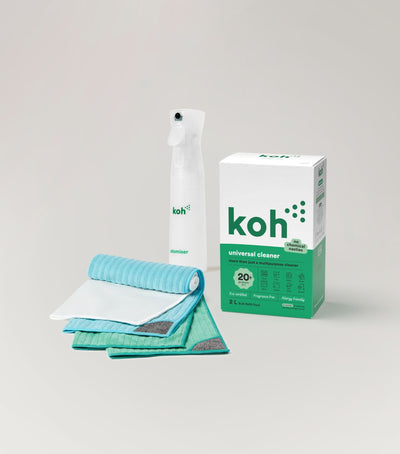
One box with Universal Cleaner, Atomiser Spray Bottle and Universal Cloths Mixed 4pk. Everything you need to start.
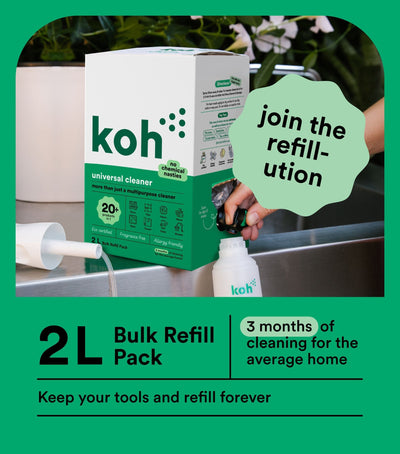
Good Environmental Choice Australia (GECA) certified, Allergy UK certified, Sensitive Choice approved, Eczema Association of Australasia recognised. Two ingredients, used undiluted, made in Australia. Bag-in-box lasts about 3 months in an average home.

Koh Perks · earn points on every order
Earn points on every purchase, refer a friend, and redeem for discounts on your next order. Find all the ways to save in one place.
Browse all Universal Cleaner articles
Last reviewed: October 2026 · Koh Australia